
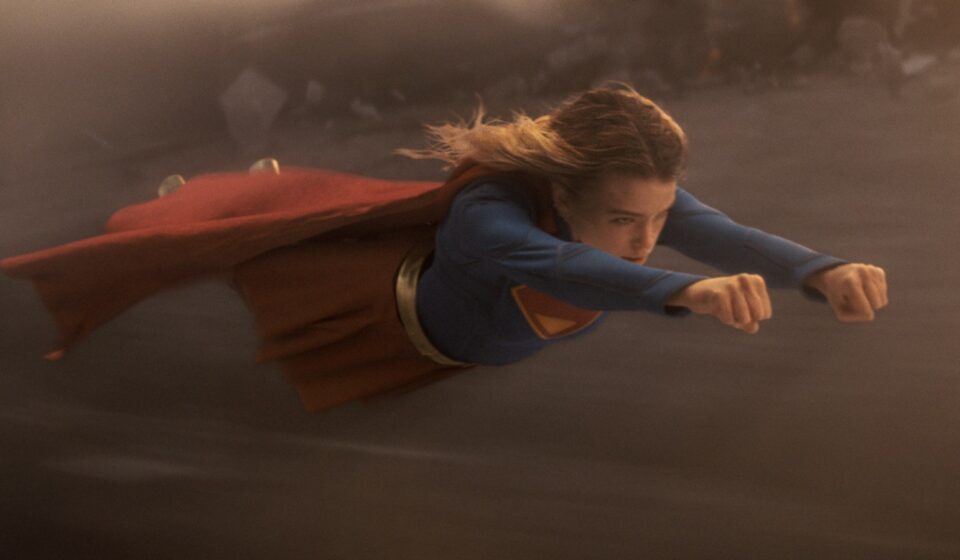

In the comic books, Supergirl spent her first decade or so as a plucky-orphan type, acquiring Streaky the Supercat and Comet the Superhorse along the way. She was a soap-opera actress in the 1970s and went back to college in the 1980s, only to get killed off in 1986. By 2004, she was fully back to life, in an angrier and more alien incarnation. But through it all, Kara Zor-El never quite acquired the full mythic heft of her cousin Kal-El. That is, until the acclaimed 2021 miniseries Woman of Tomorrow, in which writer Tom King and artist Bilquis Evely paired Supergirl with teen alien Ruthye Marye Knoll for a True Grit-like intergalactic revenge quest. They leaned into the psychological impact of her memories of her planet’s death, and even let her get drunk.
When DC Studios co-CEO James Gunn took creative control in 2022, one of his first moves was to commission an adaptation of Woman of Tomorrow. Rising screenwriter Ana Nogueira, who had a prior professional life as an actress, got the assignment, and the studio signed Craig Gillespie (I, Tonya, Cruella) as director. With the film — starring Milly Alcock as Supergirl, Eve Ridley as Ruthye, and Jason Momoa as bounty hunter Lobo — out today, Gillespie and Nogueira sat down with Rolling Stone in a midtown Manhattan restaurant to break down its genesis.
Ana, is it true that you wrote a totally different full draft of a never-made Supergirl movie, set in the prior cinematic DC universe?
Nogueira: I honestly wrote — this is breaking news — I wrote two different Supergirl movies before this one. Those two had similarities and overlaps, but were pretty different. They served two different purposes, and then that kind of all went away. I had an overall deal with [Warner Bros.], and my overall deal ended the week I gave birth. And I was like, “I guess that’s it for me and DC.” And I was bummed, of course, as any writer would be. I came back from maternity leave, and [producer] Chantal [Nong Vo] called me, and she was like, “OK, so this time we actually are making a Supergirl movie.” She said, “I want you to pitch on it.” And this is also breaking news: I said, “No.”
Wow. ‘Cause it was already a little heartbreaking?
Nogueira: It’s a little heartbreaking, yeah. I had gone down that road twice before, and it hadn’t worked out, and I was also like, “I’m not gonna get the job. I’m so dusty. I’m old news. I wrote two previous drafts.” And she was like, “I’m not taking no for an answer. I need you to pitch, Ana.” And then I had to do my work and pitch it just like anybody else, but they ended up saying yes.
And at what point did the Woman of Tomorrow aspect come in?
Nogueira: Oh, immediately when she called. She said, “We’re making a Supergirl movie. It’s based on Woman of Tomorrow. Read the comic.” So that was all already decided. And then it really did spark, so then I couldn’t really say no anymore.
How did reading the comic tweak your idea of what this could be?
Nogueira: I had always wanted to explore this version of her that was a little rough around the edges, and we weren’t able to for various reasons. And so when I picked up that comic, it felt like permission to do something that had always felt innate to the character for me. And I couldn’t walk away from that, because I was like, “This feels so true. This feels like how I would be if this had been what I had gone through.”
At that point, were you pitching a little blind because you didn’t know what was going on with Superman?
Nogueira: I had no idea what was going on with Superman. I got lucky because these universes get harder, not easier [as time goes by], because the puzzle starts to fill out and the parameters get stricter and stricter. And so I had, not free rein, but a little bit more of a blank page because there was just one movie being written. And also it’s in outer space. So I didn’t have to contend with what’s Lex Luthor doing.
Lobo is not in the graphic novel. So when did that come in?
Nogueira: That was also given to me. That was like my assignment: “We want Lobo in the movie.” So those were like the kind of little toys I was given, and I knew that Woman of Tomorrow was based on True Grit. And so I actually went back to the source, and I went back to True Grit, and that was—
Gillespie: I didn’t know that! ‘Cause I separately went back to that, too.
Nogueira: Did you? Oh, my gosh. See? There you go. And that’s when I was like, oh, that’s how Lobo fits in, because there’s Matt Damon’s character, and he’s the third entry point, the third character, the love-to-hate-to-love kind of guy. And then that’s how I was styling it, just as a Western, because I knew that’s what inspired [Woman of Tomorrow author] Tom [King]. And in terms of the medium of a Western, I think obviously it works well for a movie. Structurally.
Craig, was it the first draft that you read?
Gillespie: I only read one draft.
Nogueira: I think it was, like, the second or third draft. There were two major changes, which were notes from James, and one was that Superman isn’t known in the galaxy. In my first draft, she would go places and people would recognize Superman.
Which is very comic-book.
Nogueira: Exactly. And that’s in Woman of Tomorrow. And that was a parameter James gave me in terms of the universe. This Superman is new. He’s not out there saving worlds and planets. So he’s not known out there. This is her domain. And then the other note was to change from the comic that Kara is there when Krypton is destroyed, versus her being born on [the post-destruction planet fragment] Argo. Because the note was that — and I understand this — the Phantom Zone, all that takes over. It ends up taking over a screenplay. “She got what? She’s stuck where? What occurred?”
Right, in the TV show and some comics, the idea is that she was born before Superman but she’s younger when she shows up on Earth because she was stuck in the Phantom Zone or some other kind of warp situation. You just made her actually younger, which is much simpler.
It’s too complicated. It ends up being like she’s trying to tell Ruthye her story, and it’s this very clear thing, and then she’s like, “Yes, but then also, on my trip, I ended up in, essentially, a black hole for 25 years.”
Gillespie: All good choices.
Craig, you then pitched for this movie. How did that work?
Gillespie: It was an open directing [slot]. They were meeting other directors. I had always loved James’ tone. So I’d gently knocked on the door. I’d met [DC Studios co-CEO] Peter [Safran] like eight months before in a general [meeting]. I’d never had much luck in the superhero universe.
Had you tried to go after superhero movies before?
Gillespie: I’d met on things before, and I think, candidly, they could probably tell my heart wasn’t in it. Because I was excited about the idea of it, but I hadn’t connected to anything like I did with this. And they sent me the script. It just turned up. I got literally to the second scene, which is when you meet Kara in the bar, and she’s such a mess. She’s so emotional. She’s got so much loss going on, but it’s also really funny and acerbic and reckless. And after those two scenes back to back, I was like, “I’m in. I know exactly how I wanna do this tone.” And amazingly, it just keeps going, and it ends beautifully. It ended in a very surprising way that I was excited about, and they never wavered on.
The interesting thing is, I didn’t go back and look at anything of Supergirl before the meeting. I just read [Ana’s] script, and I put together this 120-page visual deck of what I wanted the world to be just off of the script. I didn’t even look at Tom King’s comic. I just wanted to do something that I was excited about. It was very gritty and dark, and you could just feel the dirt and the grime, and just being on the fringe of this alien world with the poverty and the crime. I went down this rabbit hole of what that visual idea was to me. And then also, literally the first thing in the meeting was, “I don’t want her to put on the superhero outfit for long as possible… until she’s emotionally ready to take that on.” And they signed off on all of it. That was Friday. Monday, 9 a.m., I got the call that I got it. And then we’re off and running. Three months later we’re prepping it. That deck I did went out to all the production heads and became the bible.
Tell me about the big slo-mo action scene, scored by a slowed down version of Jimmy Eat World’s “The Middle” with female vocals [by Kelty Greye and KidMotel]. How did we end up with that particular song choice?
Nogueira: Oh, God. It went ’round and ’round, didn’t it? There were a lot of options.
Gillespie: That was probably the biggest discussion. And it was down to the very last week, and I gotta give James credit for that one.
Did you commission that version of it?
Nogueira: No, I think we just found it.
Gillespie: But there were probably about 45 songs that went against that scene.
Was there a strong runner-up song?
Nogueira: Yes, there was.
Can you say what it was?
Gillespie: It was a remix of a classic, and I think you almost need to see it as the remix, because that’s what works so beautifully about it, was the orchestration of it. That was down to the wire getting that sequence finished, ’cause obviously the visual effects are massive. So it was a long few months of being like, “It’s gonna be great.”
I believe the movie got shorter in test screenings. What did we lose and what was the thinking behind that?
Gillespie: There was a version that was like 10 minutes longer. And literally it’s just the scenes are longer.
Nogueira: It’s like there’s some of the scenes between the girls—
Gillespie: More dialogue. And I think honestly, again, back to that ticking clock idea — there is such an urgency to the pressure that she’s under.
Nogueira: Everyone really cares about Krypto.
Gillespie: It never hurt it to keep making it tighter. And now it’s just this sort of leaner, more aggressive version of Kara. Where she’s not here for small talk. She’s not here to make friends. She’s single-mindedly on this mission.
You made a point of having us see Supergirl pee and Supergirl vomit. It seems like there was a very thought-out thing that you wanted to have a human reality.
Gillespie: For some reason it seems to be in every one of my films. There’s just a reality to it that I like, there’s a casualness, and it just grounds them more in the human world. It’s like, they have to have these functions. They have bodies.
Nogueira: I love how rugged it is. She’s just so gnarly in that scene. And then just beating up these guys, and she’s a mess.
Gillespie: And you see this undercurrent of recklessness and fearlessness. And oddly, it’s got a little bit of that fatalism of, like, the original Lethal Weapon, where he’s suicidal. And he’s just got nothing that he’s living for. The same with her. She just doesn’t have something other than Krypto that she cares about.
Nogueira: Agreed. It’s like, if I can’t save my dog, then I’m gonna put it all on the line because what else do I really have to go back to?
It was controversial when James Gunn made Superman’s parents somewhat malevolent in his movie. But your movie makes it clear all Kryptonians weren’t like that.
Nogueira: I’m trying to remember the very first draft. ‘Cause the very first draft I did have her born on Krypton. Did I even know about the Jor-El thing when I wrote the first draft? I’m not sure. I didn’t. Yeah, I don’t think so.
Gillespie: I loved how in-depth we got on the backstory. I think it carries a lot of the movie, and for me it gives you the freedom and the grace to embrace her more when you have an understanding of what their baggage is and what they’re carrying. Gives you a lot more permission for the inappropriate things that they do. And immediately I was like, “I want them to speak Kryptonian.” It just, to me, gave it more weight and felt more grounded. And forced the audience to pay attention.
You gave Milly a line to improvise in Kryptonian when she first meets Superman — “Why is he wearing his underwear?” But that line was in Kryptonian, right? So you had to go to someone on set and be like, “How do you say this?”
Gillespie: [The consultant] was panicking. Because you got five minutes, and “I need a translation.”
Nogueira: Into this language that we made up.
Gillespie: He literally would disappear for five minutes and then come back with a line.
Nogueira: And Milly would just learn it and land it. In a made-up language.
It felt like you relished the chance to show Krypton and show that world.
Gillespie: I thought it was beautifully complex, and it’s so emotional. And visually, working with Neil [Lamont], our production designer, figuring out what that world is, what their caste system is, what their role was in that society… It is a very almost different tonal shift from everything else that’s happening in the film. It’s like it’s straight out drama.
I’ve talked to James about the fact that there are fans of the previous universe that have their daggers out for these movies. And in addition to that, there’s been some culture-war-type hatred directed at this film, for whatever reason. Do you just go in expecting that kind of thing?
Nogueira: Oh, God. I try to ignore any culture-war aspect. And I do believe all of these people love these characters a lot, and they mean a lot to them, and have for years, decades maybe. I just wanted to be like, I think this one’s for everyone. We’re just gonna tell a good story, and it’s not gonna be an us-versus-them kind of a situation. I want everyone to like it. From the whole spread of the DC fan base. We made it for all of them, and I hope they’re all into it.
I love that Milly is real in interviews. I’m sure that’s the person you’ve spent time with.
Gillespie: She’s so beautifully candid and honest and open. She’s that as a person, and you see it in her performances. She channels that in the best way.
I don’t think people really want someone who’s a press-trained robot.
Gillespie: You gotta be fearless about what you’re trying to do, and that’s what I think people respond to. If they see something that feels authentic and honest and has a real strong point of view, I think you have to respect that.
Nogueira: That was the whole thing — don’t make a focus-grouped movie. Make something that feels honest, and that I always think appeals to more people. And that was what James and Peter said yes to, and that’s also just who Milly is. She’s perfectly cast.
Ana, you’re also writing or have written a Teen Titans movie and a Wonder Woman movie for this studio. What did you learn from this process that you’re taking into those projects?
Nogueira: From a boring writing standpoint, we learned even in the edit about pace, right? We gotta book it. We gotta move. But from a sort of 30,000-foot-view aspect, I wrote something that felt quite personal, and it could hold up on other planets. Like, how did you do a galaxy — and I’m like, I didn’t even think about that. I was thinking about Kara. It was personal and true, and it can go all over. And so I try not to spin out on lore or even set pieces. I try to be like, “What feels personal, and will it travel? Is it big enough emotionally to warrant a battle?”
For each of them, is there a touchstone of a particular comic book story or era?
Nogueira: No, honestly.
Craig, do you have a hunger to do more in this area?
Gillespie: I just try to stay present. And whatever comes across my table, it’s always character. It doesn’t matter whether it’s this scale or whether it’s a $10 million thing. If I’m excited about shooting that scene, that’s where my yes is.